There is a version of an athlete getting better that should worry you. They lean out, their times drop, the praise comes in. Underneath it, the body has quietly started shutting down systems it can no longer afford. That is Relative Energy Deficiency in Sport, or RED-S, and the data suggest it affects a real share of endurance rosters right now, in male and female athletes, mostly undetected. It usually shows up off the training log first (in sleep, in mood, in how often an athlete gets sick), well before the times turn.
Here is what the evidence says, where it is solid, where it is still moving, and the two places the popular write-ups get it wrong.
What RED-S actually is
The idea is simpler than the acronym. When an athlete’s energy intake doesn’t cover the cost of training plus the cost of simply being alive, they’re in a state called low energy availability (LEA). Hold them there long enough and the body starts rationing: it turns down the functions it can live without to protect the ones it can’t. Reproduction is near the top of the “can be switched off” list. So are aspects of immune function, bone remodeling, and metabolic rate.
One thing a single-sport coach tends to miss: “the cost of being alive” is not fixed. A stressful job, exam season, a new baby, broken sleep, a second sport: all of it raises the bill. An athlete can drop into a deficit without changing a thing about their diet, just because life or training got heavier. That’s why this is better understood as a budget problem than a nutrition problem: the question isn’t only “are they eating enough,” it’s “are they eating enough for the life they’re living this month.”
The International Olympic Committee named this syndrome RED-S in its 2014 consensus statement 1, deliberately broadening the older Female Athlete Triad (disordered eating, menstrual dysfunction, low bone density; defined by the ACSM in 1992 2) into a model that covers many body systems and explicitly includes male athletes. The 2023 update treats LEA as a spectrum, from a short dip the body can handle to a real problem, rather than an on/off switch 3.
It is common, not rare
This is not an elite-only, edge-case concern. In screened cohorts of female endurance athletes, the share flagged at risk for LEA runs around 65% 4; menstrual dysfunction affects roughly 20% of exercising women and, in some endurance-runner cohorts, as many as half 4. On the male side, the one most coaches don’t think to watch, 47% of competitively trained male endurance athletes screened at risk for LEA 5.
A word on what “at risk” means, because it’s the number a coach will misquote. These are screening-tool flags (questionnaire results like the LEAF-Q), not confirmed diagnoses. “Half of the boys have RED-S” is not what the data say. What they say is that a large share warrant a closer look, which, on a roster you can’t run lab panels on, is exactly the population a coach is positioned to notice. Put it in roster terms: on a twelve-deep girls’ squad, a majority screening at-risk is plausible; on the boys’ side, roughly half of a varsity group. Not all of them have RED-S; you just don’t know yet which ones do. That’s the point.
And one finding pointed straight at the cycling coaches: among those male athletes, the cyclists fared worse than the runners 5. If you coordinate a club, this is not someone else’s track-team problem.
Nearly half of screened male endurance athletes were flagged at risk for low energy availability. “It affects men too” undersells it. This is not a footnote to a women’s issue.
The warning sign is different in each sex
The most useful thing this evidence gives a coach is knowing what the alarm looks like. The early warning signs are essentially the same for everyone. Only one loud signal is sex-specific.
The female signal is loud: hypothalamic amenorrhea: periods become irregular or stop entirely as the body conserves energy 1. The danger is cultural, not biological. A lost period gets quietly reinterpreted as a sign of being lean and fit. It is the opposite, and it is the clearest early warning RED-S offers. That is why letting it get normalized on a girls’ team (“that just happens to the fast ones”) is the most dangerous habit on this whole list.
Male athletes get the same energy shortfall and the same hormonal suppression (low testosterone, reduced libido, impaired sperm production; the clinical name is functional hypogonadotropic hypogonadism 6), but with no monthly event to stop. The signal is silent. So you fall back on the shared signs, the things you can actually observe without a lab: recurrent unexplained bone stress injuries, performance that stalled despite good training, persistent fatigue, and flat mood or libido. In one study of 24 elite distance runners, about 40% had low testosterone, and those men sustained bone stress injuries 4.5 times as often as their normal-testosterone teammates 7. That’s a small, elite sample, so don’t read 4.5 times as a precise risk for a fourteen-year-old. The direction is the point.
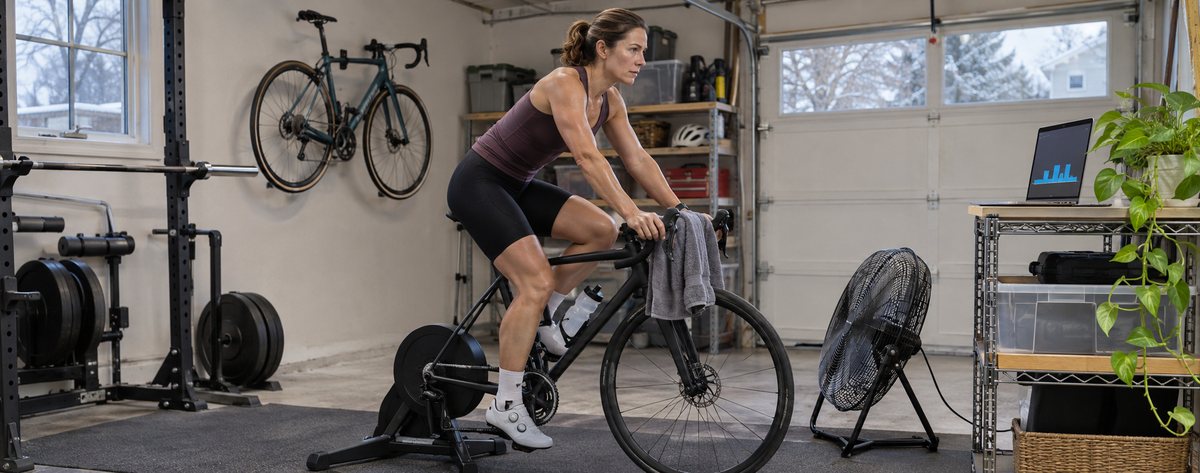
Those shared signs are not a male-only list. They’re the backup for everyone, and they matter just as much for your female athletes, because the loud signal vanishes the moment an athlete is on hormonal contraception (more on that below). And the list shifts by sport: a cyclist won’t show bone stress injuries the way a runner does, because low-impact training mutes that flag. For riders the signals that matter are stalled power, chronic fatigue, and the athlete who can’t finish a session they used to own, with low bone density tending to surface later and quieter rather than as an acute break.
| Female athletes | Male athletes | |
|---|---|---|
| Loud, sex-specific sign | Lost or irregular periods (amenorrhea) | None obvious: testosterone falls silently |
| Shared signs (watch in everyone) | Recurrent bone stress injuries (weaker flag in low-impact sports like cycling), stalled performance, persistent fatigue, flat mood or libido, frequent illness, GI trouble | Same list; for males it’s the whole warning system |
| What’s happening underneath | Suppressed reproductive hormones (estrogen ↓) | Suppressed reproductive hormones (testosterone ↓) |
| Threshold to onset | Responds at milder, shorter deficits | Appears to require a deeper, longer deficit |
| Detection difficulty | Moderate, unless amenorrhea is normalized away or masked by the pill | High: easily blamed on “training stress” |
One caveat: the male reproductive axis appears more resistant to short-term LEA than the female one. It seems to take a deeper, longer deficit to suppress it. Male endocrine disruption is typically reported below a sustained ~20–25 kcal/kg fat-free-mass per day, held for weeks to months 6. Treat that figure as illustrative, not a hard line: there are no validated male-specific diagnostic thresholds yet. Male studies borrow the cut-offs set for women, which is why the prevalence numbers above read as “at-risk” rather than “diagnosed,” and why the consensus flags this as an open research gap 3. “Men get RED-S too” is well-supported. “It’s identical in men and women” is not.
What the deficit actually costs
The harms are real and measurable. A 2024 controlled study held female endurance athletes at 22 versus 52 kcal/kg FFM/day for 14 days. The underfueled group showed elevated cortisol, immune changes consistent with higher infection risk, and reduced endurance performance. That drop did not recover after three days of refueling 8.
The performance cost of underfueling outlasted the underfueling itself. Three days of eating normally did not buy the performance back.
Gut complaints are part of the picture too: delayed gastric emptying (food leaving the stomach slowly), bloating and constipation are documented in LEA 9. These are often the athlete’s first complaint, and they get treated as a gut problem on its own (more fiber, probiotics, cutting gluten) when they’re actually a sign of underfueling. When an endurance athlete who’s lean and training hard reports their gut going sideways, put underfueling on the list of possible causes before you reach for the fiber; with an underfueled gut, adding fiber can make things worse, not better 9. The question isn’t what’s wrong with their digestion. It’s are they eating enough for the work they’re doing.
Where the popular advice goes wrong
Two claims circulate widely enough to correct directly.
What this means for your Tuesday
Not a protocol; you know your roster. What the evidence lets you act on, roughly in order of importance:
- Be suspicious of “leaner and faster” arriving together. It’s the seductive early phase, it catches both your boys and your girls, and it takes zero clinical knowledge to notice. If you remember one thing, make it this.
- Retire “no period, no problem.” A lost or irregular cycle in a female athlete is a reason to act, not a sign of fitness. A withdrawal bleed on the pill is not an all-clear either. Make it a subject that can be raised without embarrassment.
- Watch the shared signs in everyone. Recurrent bone stress injuries (or, in cyclists, stalled power and chronic fatigue), performance that flatlined despite good training, persistent fatigue, flat mood or libido, frequent illness, gut trouble. These are your whole warning system for the boys and your backup for the girls.
- Ask the questions the spreadsheet can’t. Sleep, appetite, illness frequency, mood, energy, menstrual or pill status. Underfueling shows up in these long before the training data does. A coach who only watches training load never thinks to ask.
- You’re the smoke detector, not the fire department. The literature is consistent that coaches and even physicians under-recognize this 312. Your job is to notice, ask and refer (to a sports dietitian or a physician who works with athletes), not to diagnose. Plenty of coaches get exactly one of those two halves wrong.
The instinct worth building: treat “lighter, faster, no problems” as a question rather than a victory, for your girls and your boys alike.
Sources
- Mountjoy M, et al.. The IOC consensus statement: beyond the Female Athlete Triad — Relative Energy Deficiency in Sport (RED-S). Br J Sports Med, 2014. https://pubmed.ncbi.nlm.nih.gov/24620037/ ↩
- American College of Sports Medicine; AAOS summary. Female Athlete Triad (1992) and the shift to RED-S — 'A Bone of Contention'. 2015. https://www.aaos.org/AAOSNow/2015/Dec/Research/research2/ ↩
- Mountjoy M, et al.. 2023 IOC consensus statement on Relative Energy Deficiency in Sport (REDs). Br J Sports Med 57(17):1073–1097, 2023. https://www.olympics.com/ioc/news/ioc-publishes-new-consensus-statement-on-relative-energy-deficiency-in-sport-reds-to-protect-athlete-health ↩
- Logue D, et al.. Risk of Low Energy Availability, Disordered Eating, Exercise Addiction, and Food Intolerances in Female Endurance Athletes. https://www.ncbi.nlm.nih.gov/pmc/articles/PMC9110838/ ↩
- Prevalence of Low Energy Availability in Competitively Trained Male Endurance Athletes. https://www.ncbi.nlm.nih.gov/pmc/articles/PMC6843850/ ↩
- Hungry runners — low energy availability in male endurance athletes and its impact on performance and testosterone (mini-review). https://pubmed.ncbi.nlm.nih.gov/37052052/ ↩
- Examination of Athlete Triad Symptoms Among Endurance-Trained Male Athletes: A Field Study. https://www.ncbi.nlm.nih.gov/pmc/articles/PMC8664375/ ↩
- Low energy availability increases immune cell formation of reactive oxygen species and impairs exercise performance in female endurance athletes. 2024. https://pubmed.ncbi.nlm.nih.gov/38936255/ ↩
- More than a gut feeling: what is the role of the gastrointestinal tract in female athlete health?. Eur J Sport Sci, 2021. https://www.tandfonline.com/doi/full/10.1080/17461391.2021.1921853 ↩
- The Female Athlete Triad/Relative Energy Deficiency in Sports (RED-S) — incomplete reversibility of bone loss. https://pmc.ncbi.nlm.nih.gov/articles/PMC10304901/ ↩
- Treatments to Prevent Bone Loss in Functional Hypothalamic Amenorrhea: a Systematic Review and Meta-Analysis; with EBP review and Cobb & Bachrach on OCPs and stress fractures in female runners. https://pmc.ncbi.nlm.nih.gov/articles/PMC5686767/ ↩
- Measurement of energy availability in highly trained male endurance athletes and its associations with bone health and endocrine function; Male Athlete Triad construct. https://pmc.ncbi.nlm.nih.gov/articles/PMC11490448/ ↩