Athlete Corner

The science, minus the jargon — read it, then send it to a teammate

Sport
Coaching World
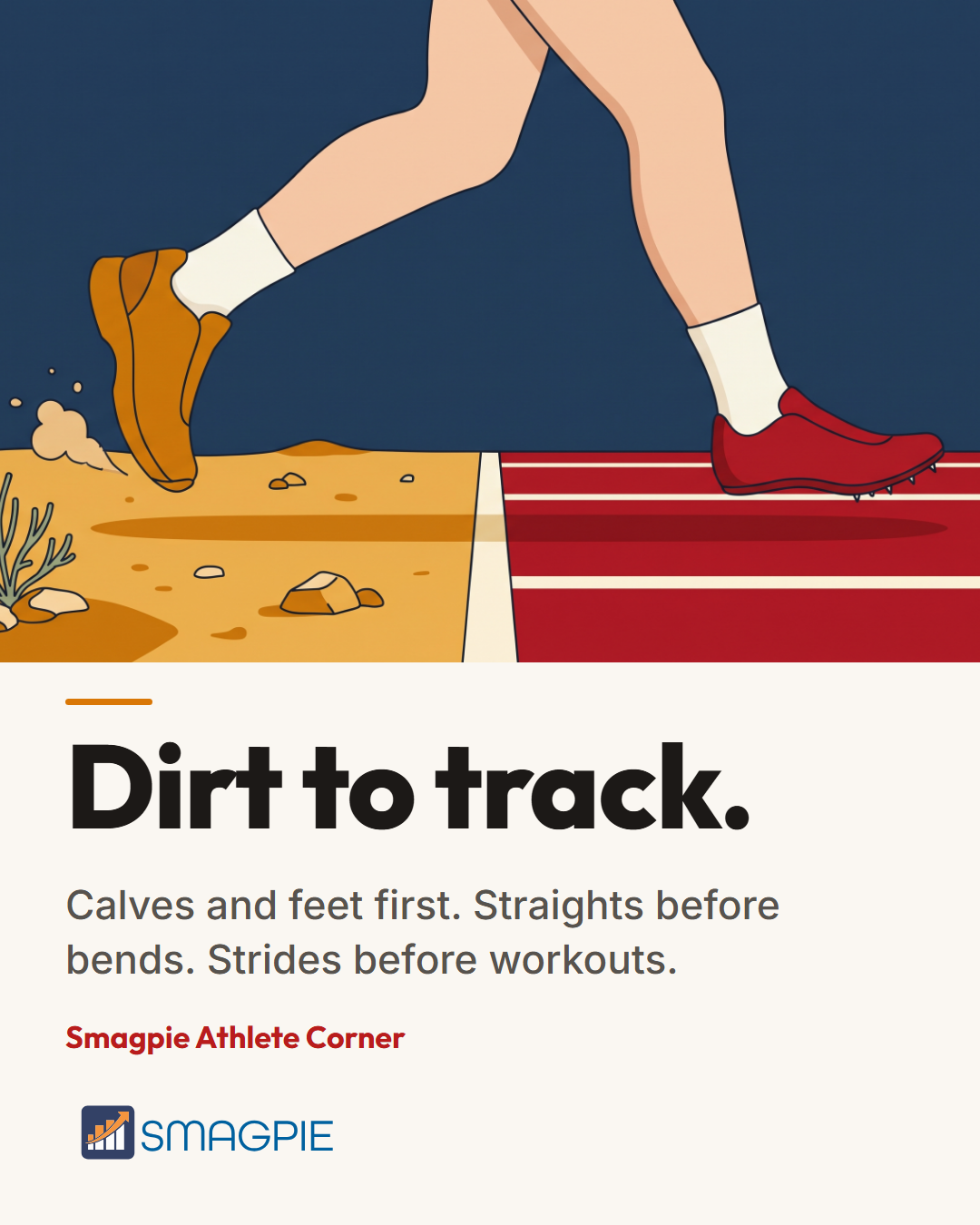
A share card with a flat illustration of a runner's stride: the back foot, in a dusty trainer, pushing off a desert dirt path, and the front foot, in a track spike, landing across the line onto a red running track. Text: Dirt to track. Calves and feet first. Straights before bends. Strides before workouts. Smagpie Athlete Corner.
running strength

Dirt to Track: Get Your Ankles and Knees Ready for Spring

Why the switch from cross country to track hurts, and the winter strength, foot and jump work that gets you to spring healthy and faster.

Share card reading: Dress for mile two. Start a little cold. Get dry the minute you stop. Smagpie.
running

Running in the Cold: What to Wear and What to Do

Dress for mile two, warm up inside, don't chase your watch on snow, and get into dry clothes the minute you stop.

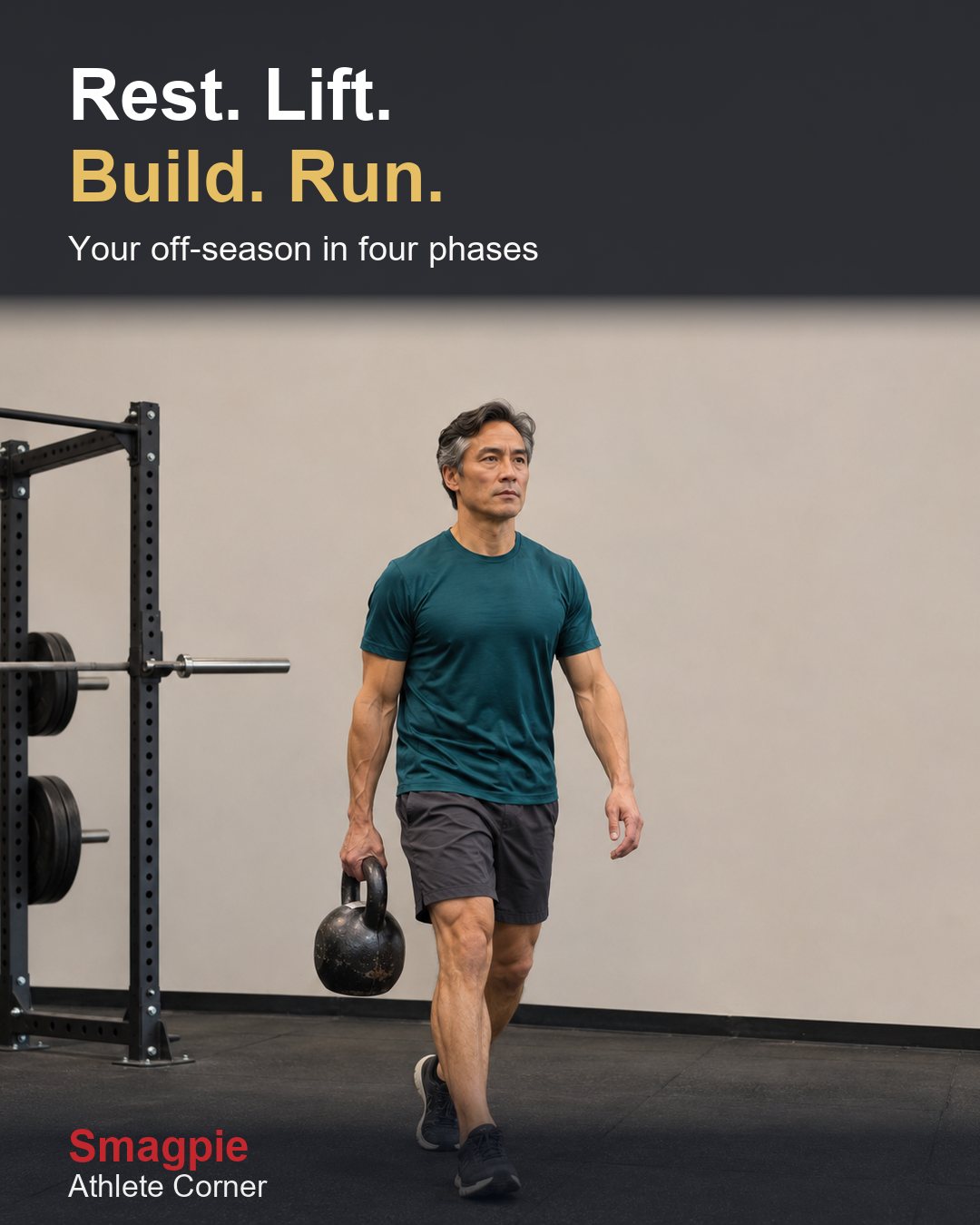
Photo of a grey-haired man in his fifties carrying a heavy kettlebell across a gym floor, with a squat rack behind him and the text: Rest. Lift. Build. Run. Your off-season in four phases. Smagpie Athlete Corner.
triathlon strength

Your Off-Season in Four Phases: Rest, Lift, Build, Run

What to do between your last race and your next build: two easy weeks, heavy lifting twice a week, a bike block, and a careful return to running.

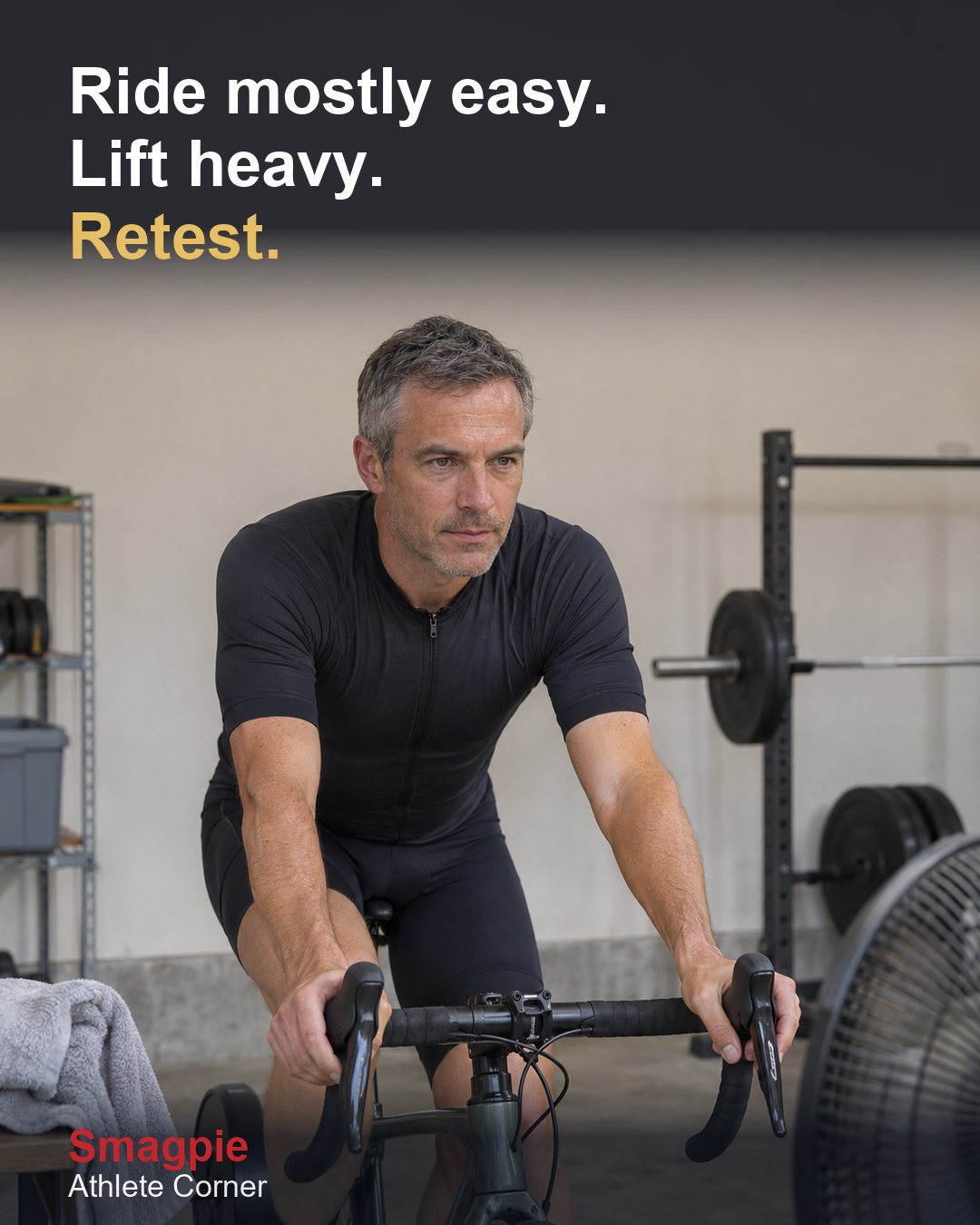
Photo of a grey-haired man riding a smart trainer in a garage, with a squat rack and weight plates behind him and the text: Ride mostly easy. Lift heavy. Retest. Smagpie Athlete Corner.
cycling triathlon

Your Winter FTP Plan: Ride Mostly Easy, Lift Heavy, Retest

How to raise your FTP over a winter: test honestly, ride mostly easy, lift heavy twice a week, retest, and know what to change if it stalls.

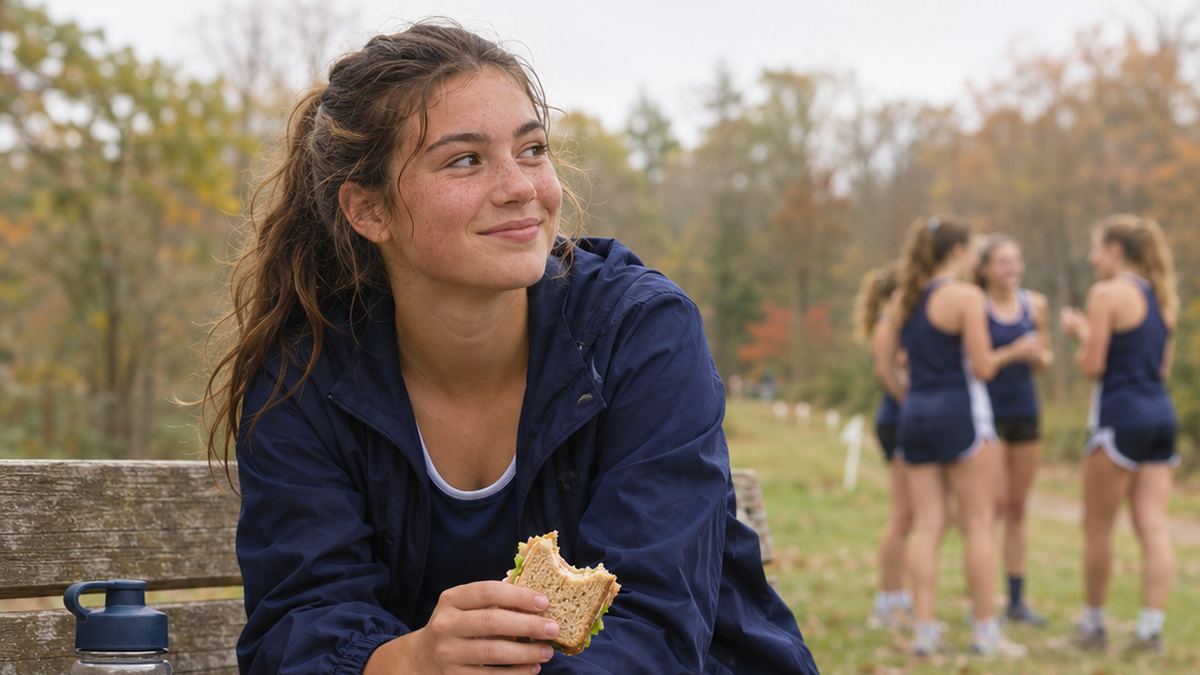
A high school girl in a navy cross-country jacket smiles on a bench by a wooded course, eating a sandwich, as teammates talk in the background.
running

Your Bones Are Still Being Built

Girls' cross country has more stress fractures than other high school sports. It isn't bad luck, and most of it is in your hands. Here's what to do.

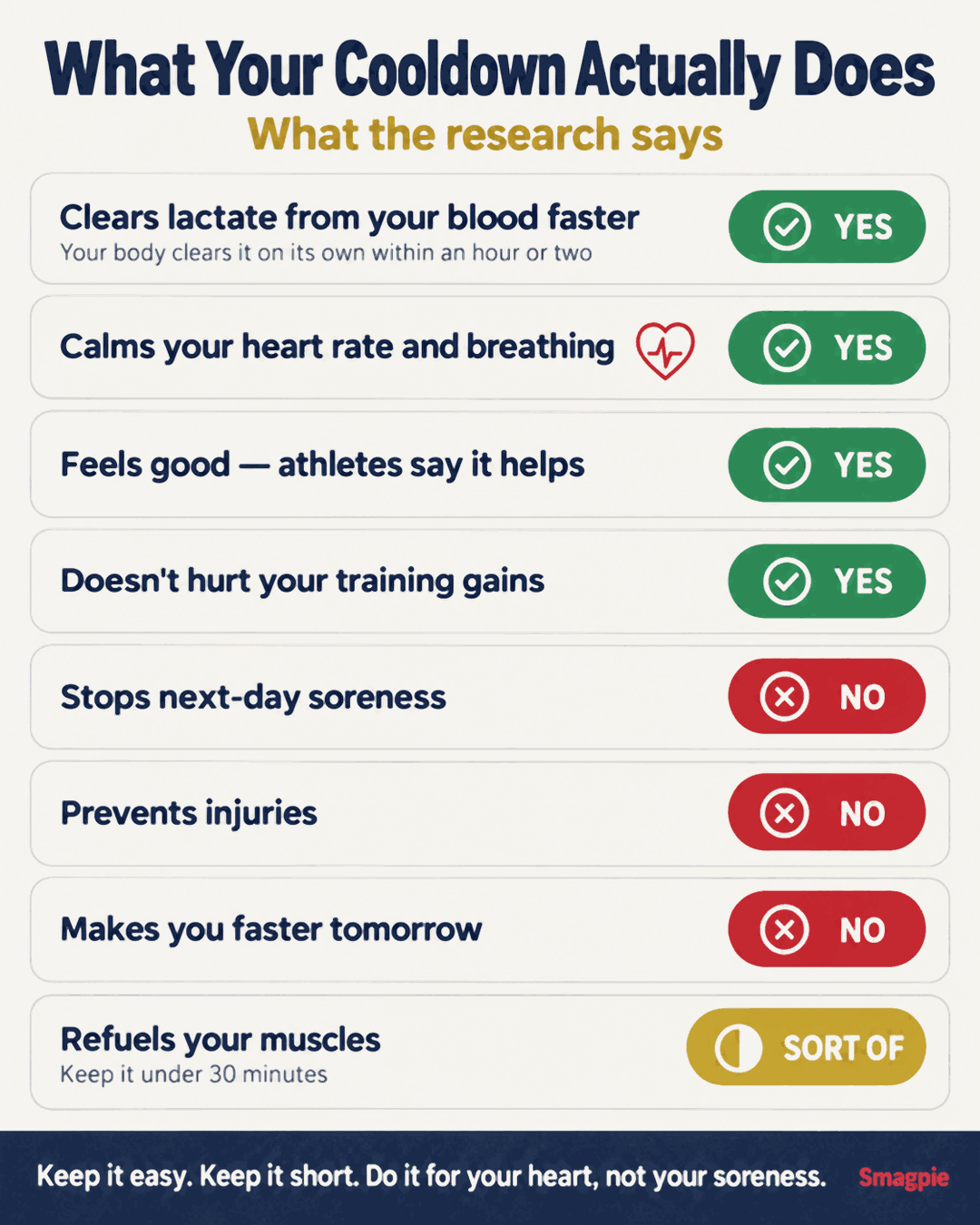
Scorecard titled What Your Cooldown Actually Does. Yes: clears lactate from your blood faster, calms your heart rate and breathing, feels good, doesn't hurt your training gains. No: stops next-day soreness, prevents injuries, makes you faster tomorrow. Sort of: refuels your muscles, keep it under 30 minutes.
running cycling swimming

What Your Cooldown Actually Does

Your cooldown won't stop soreness or prevent injuries. Here's what it really does for runners, cyclists and swimmers, and how to do it right.

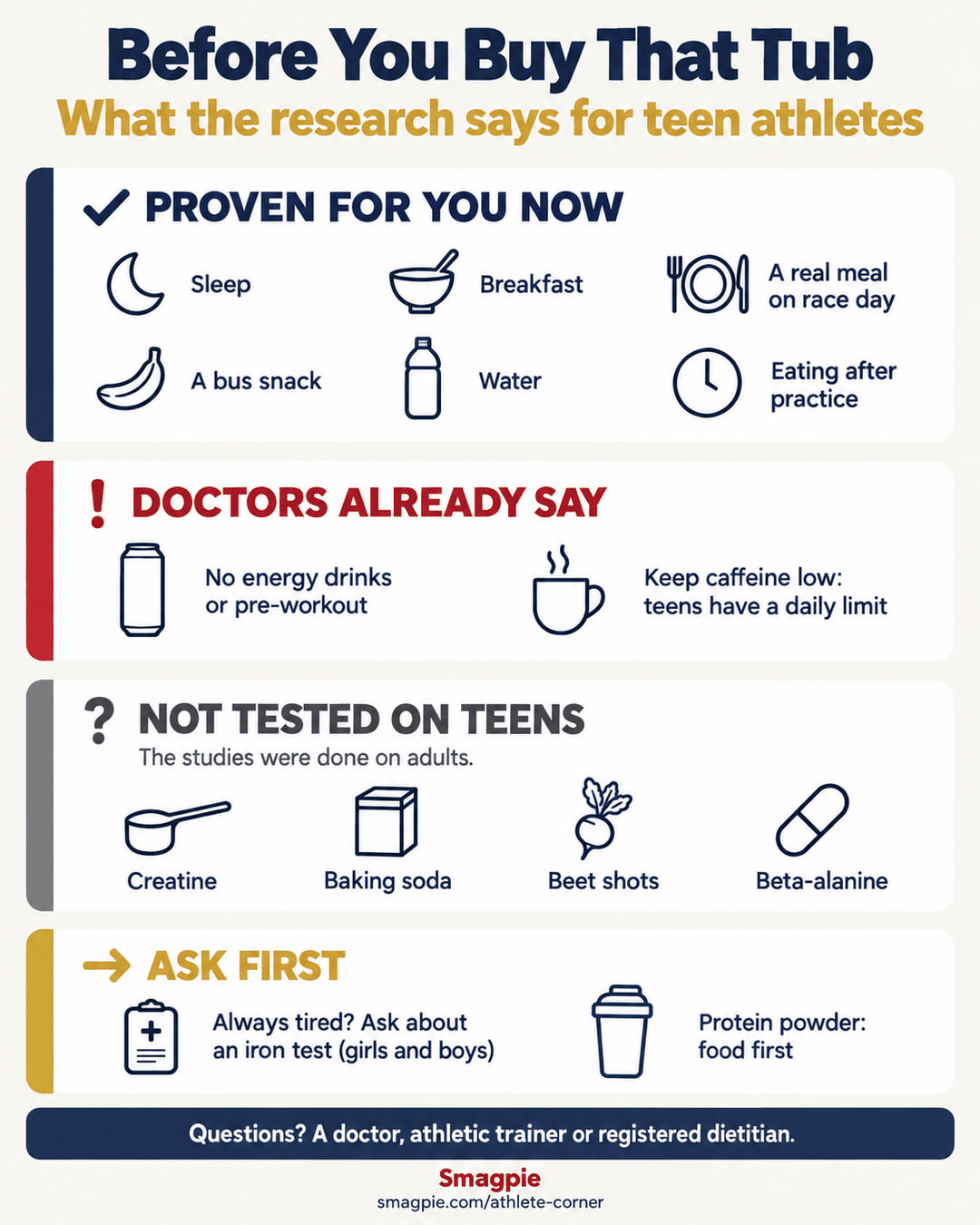
A card titled Before You Buy That Tub, in four bands. Proven for you now: sleep, breakfast, a real meal on race day, a bus snack, water, eating after practice. Doctors already say: no energy drinks or pre-workout; keep caffeine low, there is a daily limit for teens. Not tested on teens: creatine, baking soda, beet shots, beta-alanine. Ask first: an iron test if you are always tired, girls and boys; protein powder, food first. Footer: questions go to a doctor, athletic trainer or registered dietitian.
running cycling triathlon swimming

Before You Buy That Tub

Creatine, pre-workout, caffeine, beet shots, baking soda: what's proven for teen athletes, what's never been tested on them, and what to ask a doctor.

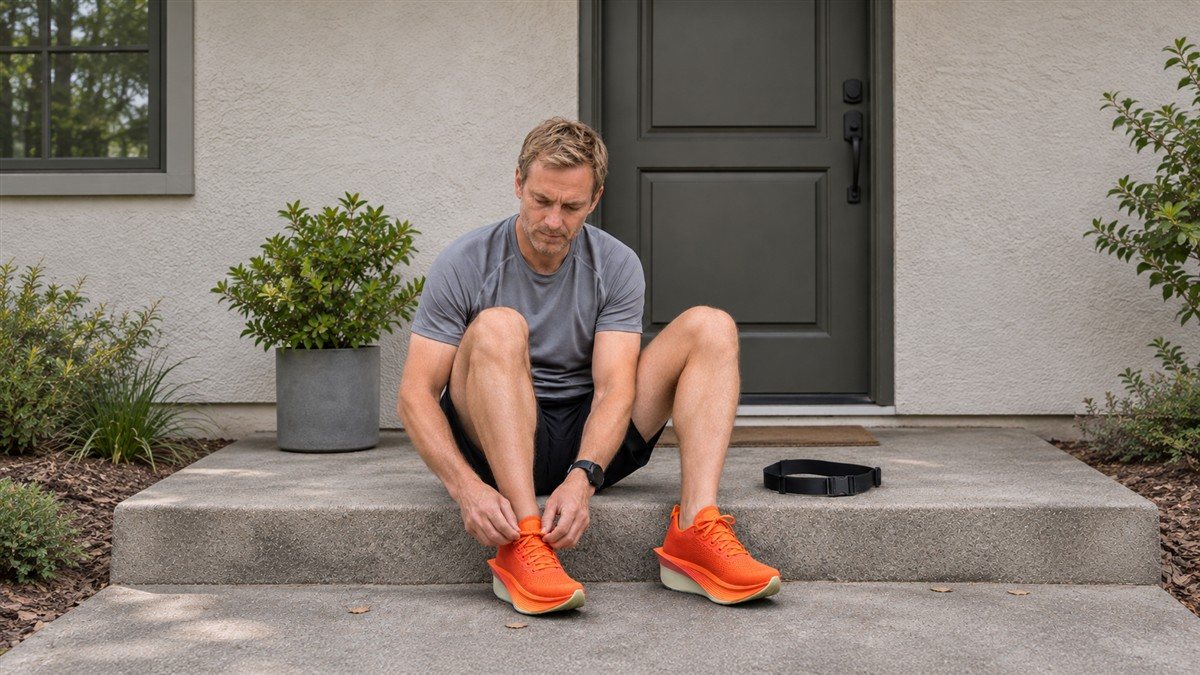
A middle-aged runner on a front step tying a pair of thick-soled orange racing shoes.
running triathlon

Carbon Shoes at 10-Minute Pace: When Do They Really Help?

Do carbon-plated shoes help at 10-minute pace or in an IRONMAN run/walk? What the lab studies found, and how to find out if they work for you.

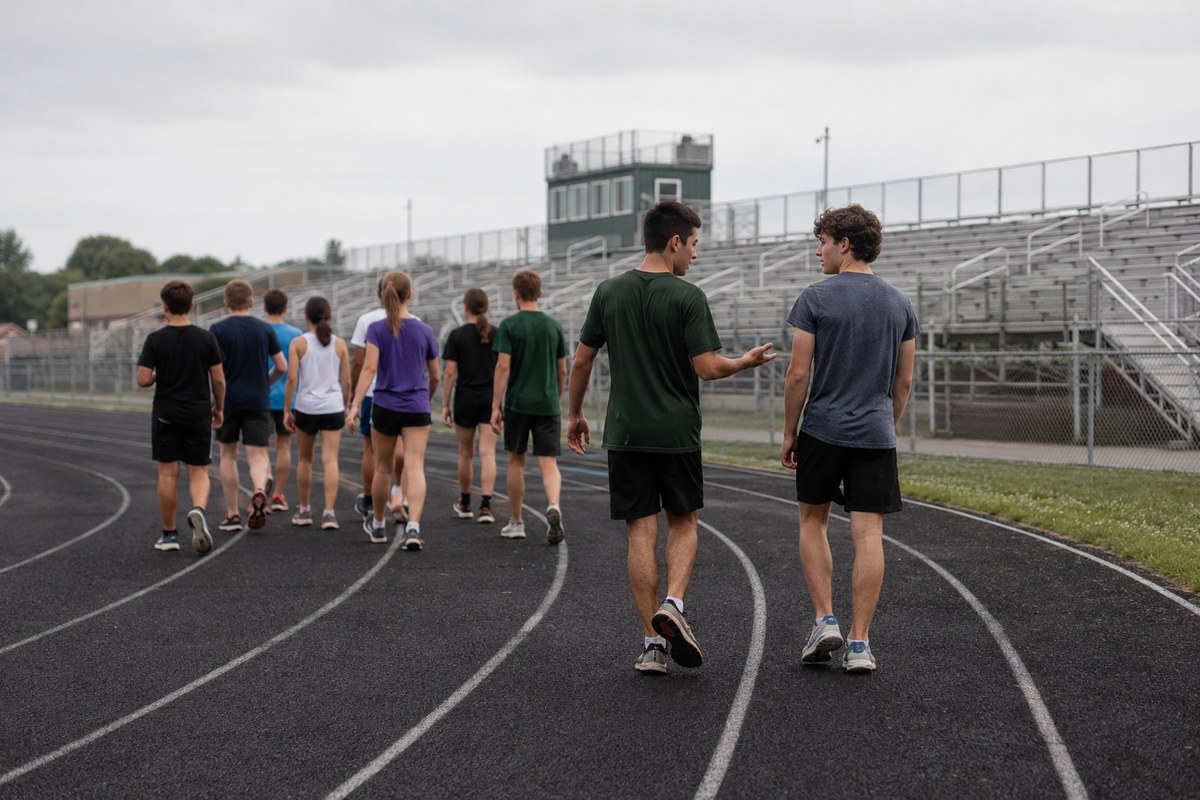
Two high-school runners talking at the back of the team on a cooldown walk around a school track, overcast light.
running swimming

Who's In Your Circle?

The athletes who last aren't the toughest ones. They have a few people they can actually talk to — and know who to go to when it's bigger than that.

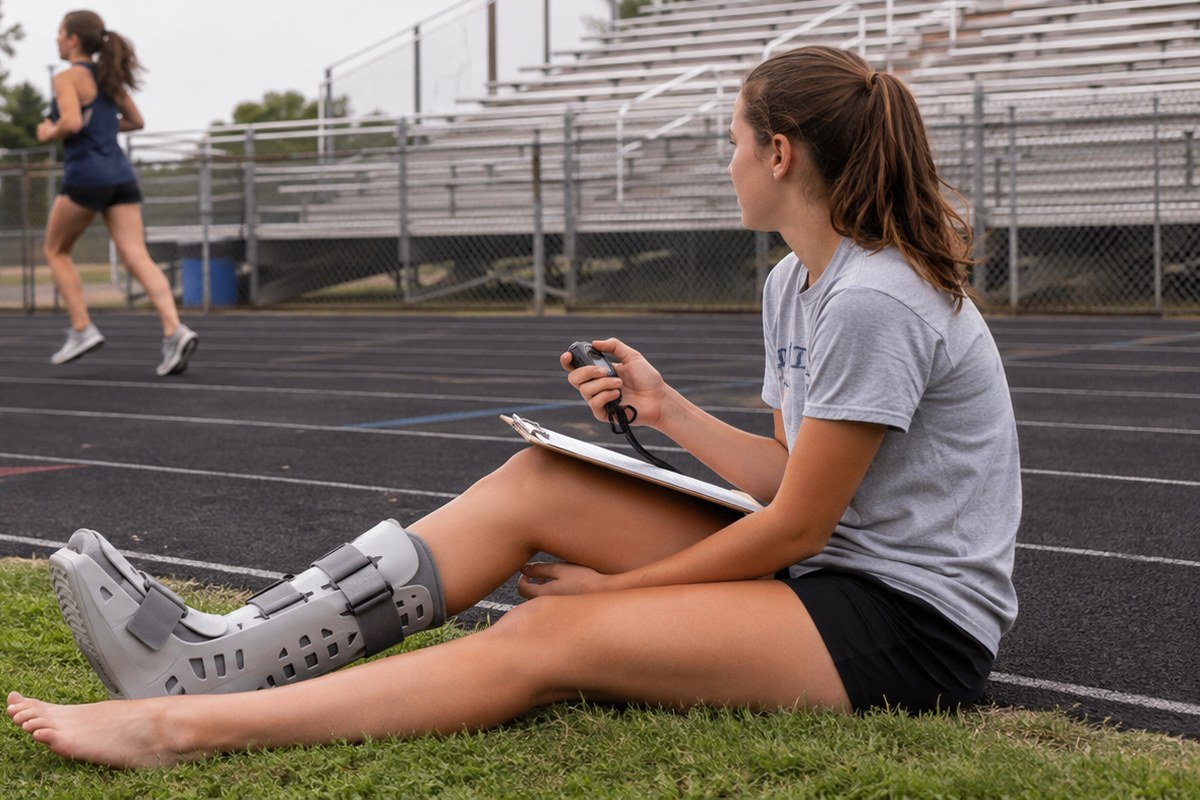
A high-school runner sitting on the grass beside the track in a walking boot, holding a stopwatch and clipboard, watching a teammate run past.
running swimming

Two Words

If someone summed you up in two words, would both be about your sport? Caring isn't the problem — only having one room is.

A high-school cross-country runner standing on a grass course in late autumn with hands on hips, an orange course marker and teammates behind her.
running swimming

Why Do I Do This?

Most people never actually ask. Asking doesn't mean you're quitting — it usually means the opposite.

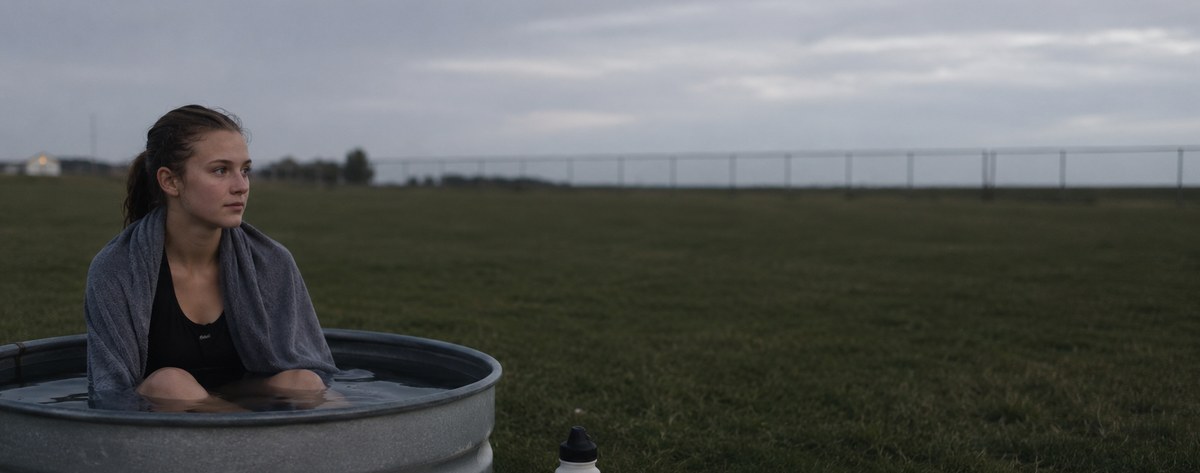
A high-school-age distance runner sitting in a plain galvanized stock tank of cold water on a practice field at dusk, towel over her shoulders, calm and unremarkable.
running triathlon cycling swimming

The Ice Bath Isn't Doing What You Think It's Doing

Ice baths don't hurt your running or riding, don't really fight soreness, and definitely aren't burning extra calories. Here's what actually matters.

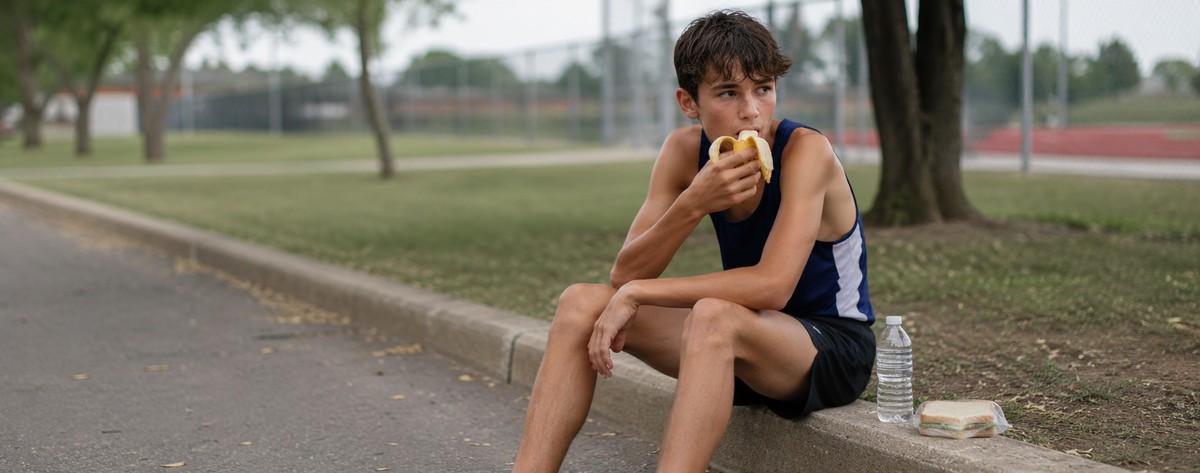
A high-school cross-country runner sitting on a curb after practice, eating a banana and a sandwich out of a backpack.
running

The Most Important Thing About Running Nutrition Is Just Eating Enough

Everyone argues about protein grams and perfect snacks. What actually makes or breaks your season is simpler: eat enough to match your training.

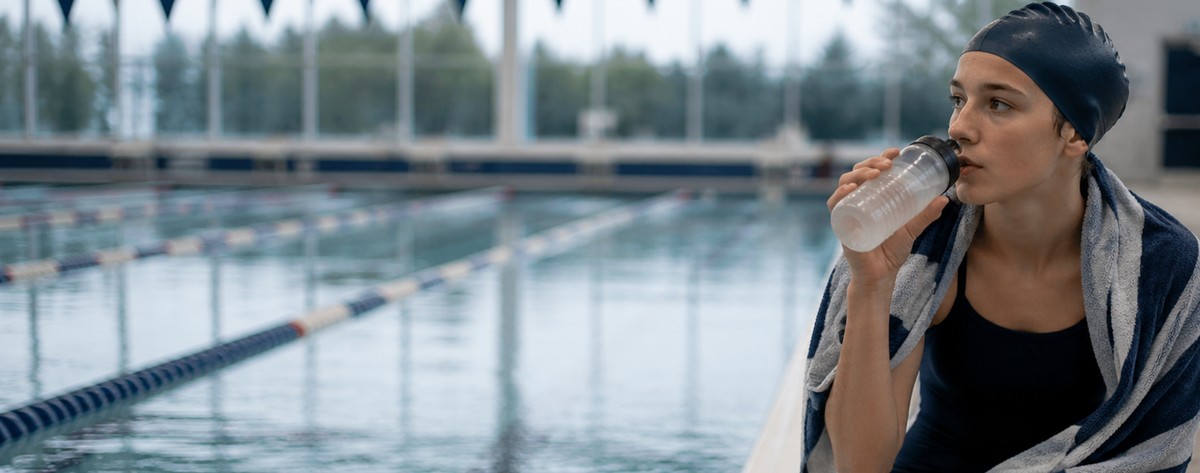
A high-school swimmer on the pool deck at dawn wrapped in a towel, eating a banana before early-morning practice.
swimming

Under-Fueled Looks Just Like Overtrained

The flat, tired, stalled swimmer usually isn't overtrained — they're under-fueled. Fuel the training you're actually doing.

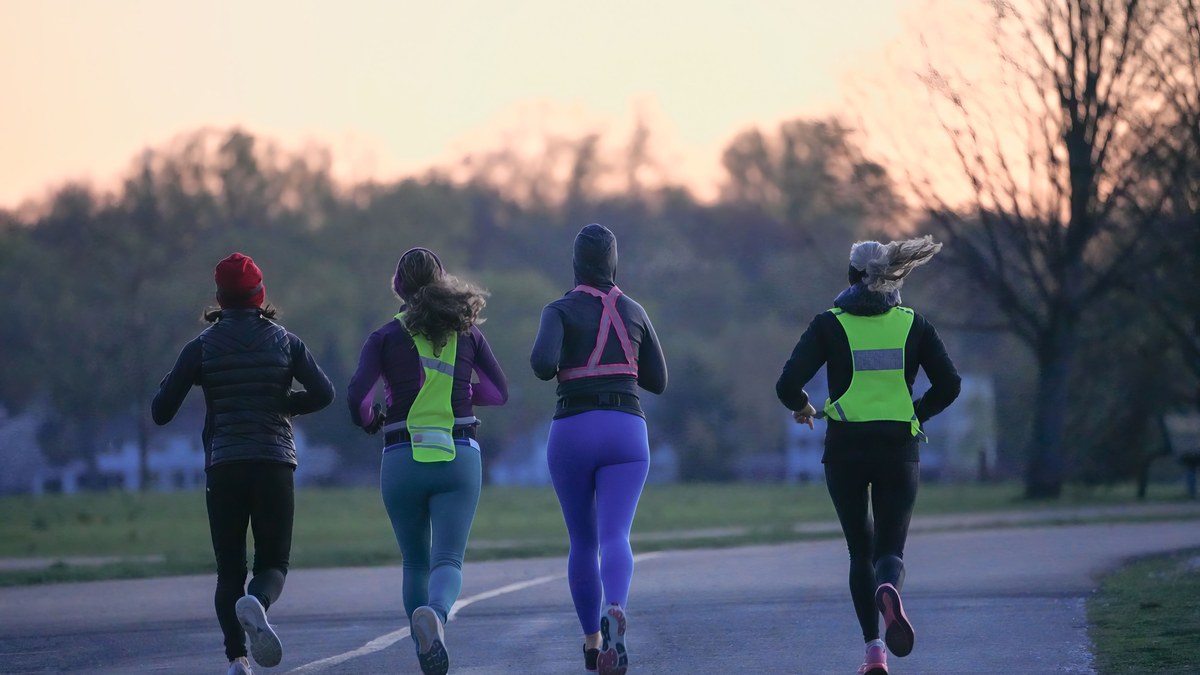
Four runners seen from behind, jogging easy on an open road at dawn.
running triathlon

Your Easy Runs Are Probably Too Fast

Someone online says easy miles are junk and you should just train hard. The truth: easy running works — most runners just do it too fast.

Share card reading: The run that hurts you is usually one big jump — keep your long run close to what you've already done.
running

The Run That Hurts You Is Usually One Big Jump

The riskiest run isn't your weekly total creeping up. It's one session that's way longer than anything you've done lately.

Share card reading: Get stronger, run cheaper — the calf hold that makes you a more efficient runner.
running

The Calf Hold That Makes You a More Efficient Runner

Getting stronger helps you run using less energy. One of the easiest ways doesn't beat up your legs at all — you just hold still.

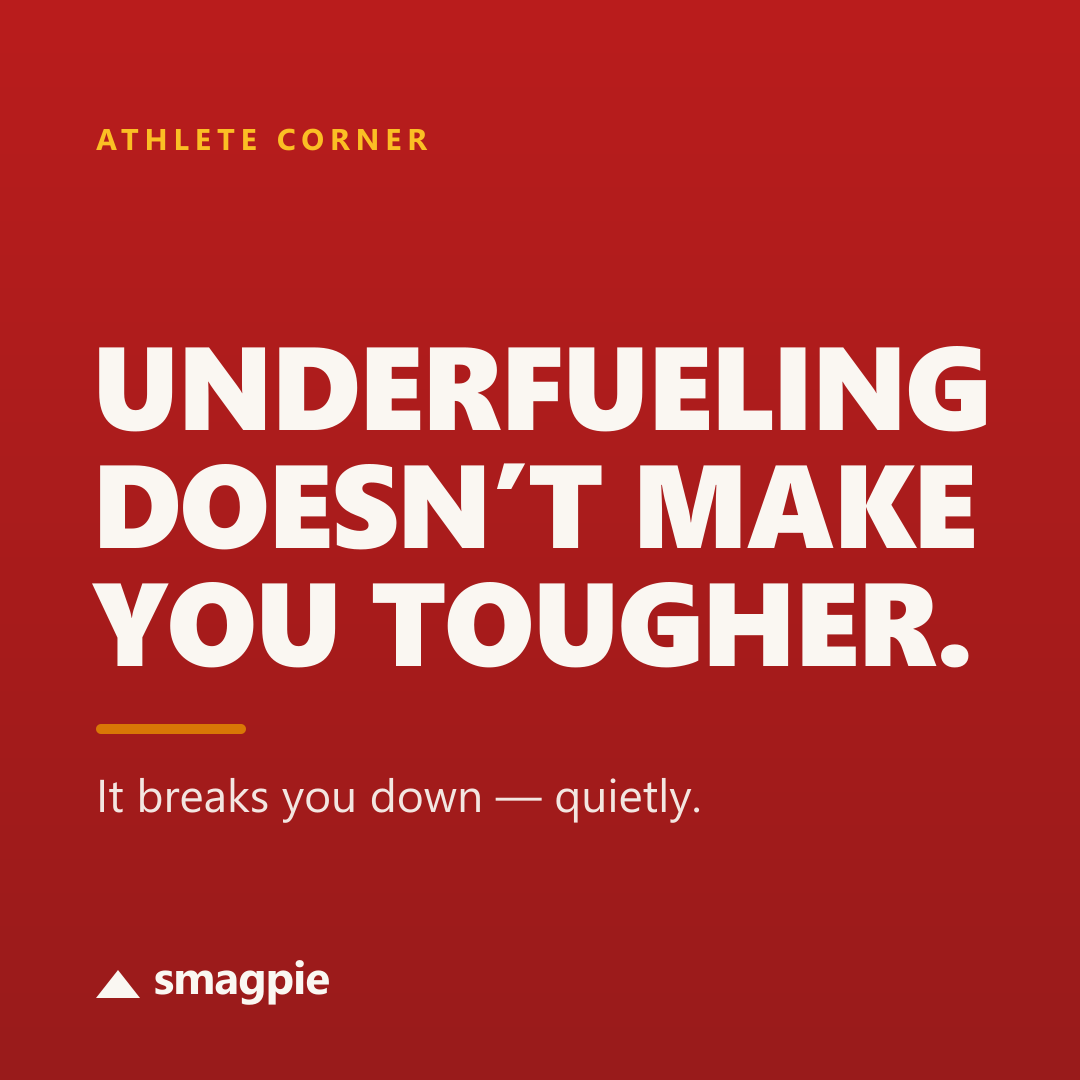
Share card reading: Underfueling doesn't make you tougher — it breaks you down, quietly.
running

Underfueling Doesn't Make You Tougher

Getting lighter and faster can feel like winning. Sometimes it's the first sign your body is running on empty.

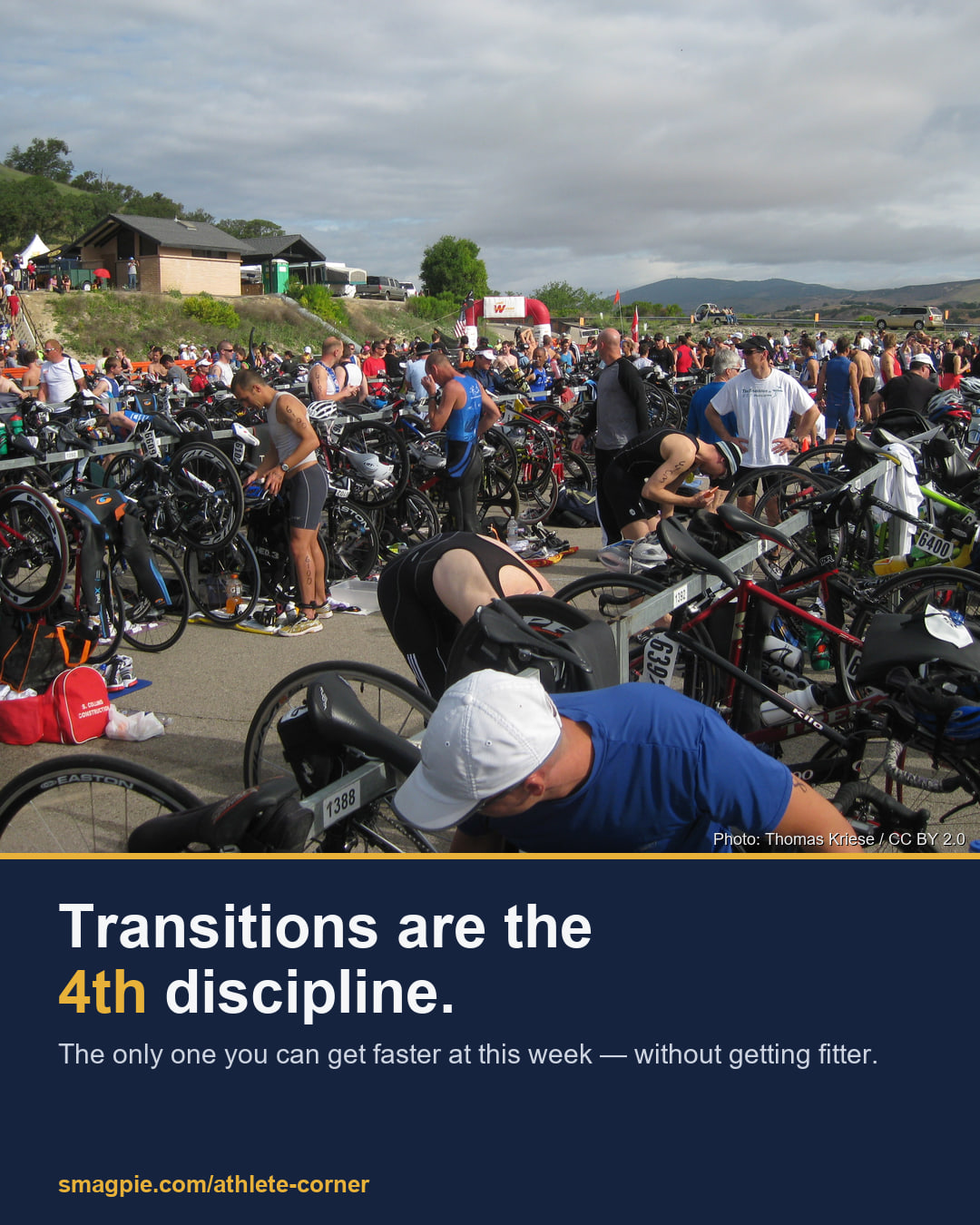
Share card reading: Transitions are the 4th discipline — the only one you can get faster at this week, without getting fitter.
triathlon

The Free Speed Hiding Between Your Swim, Bike, and Run

Transitions are triathlon's fourth discipline — and the easiest place to get faster. The trick is the opposite of what you'd think.

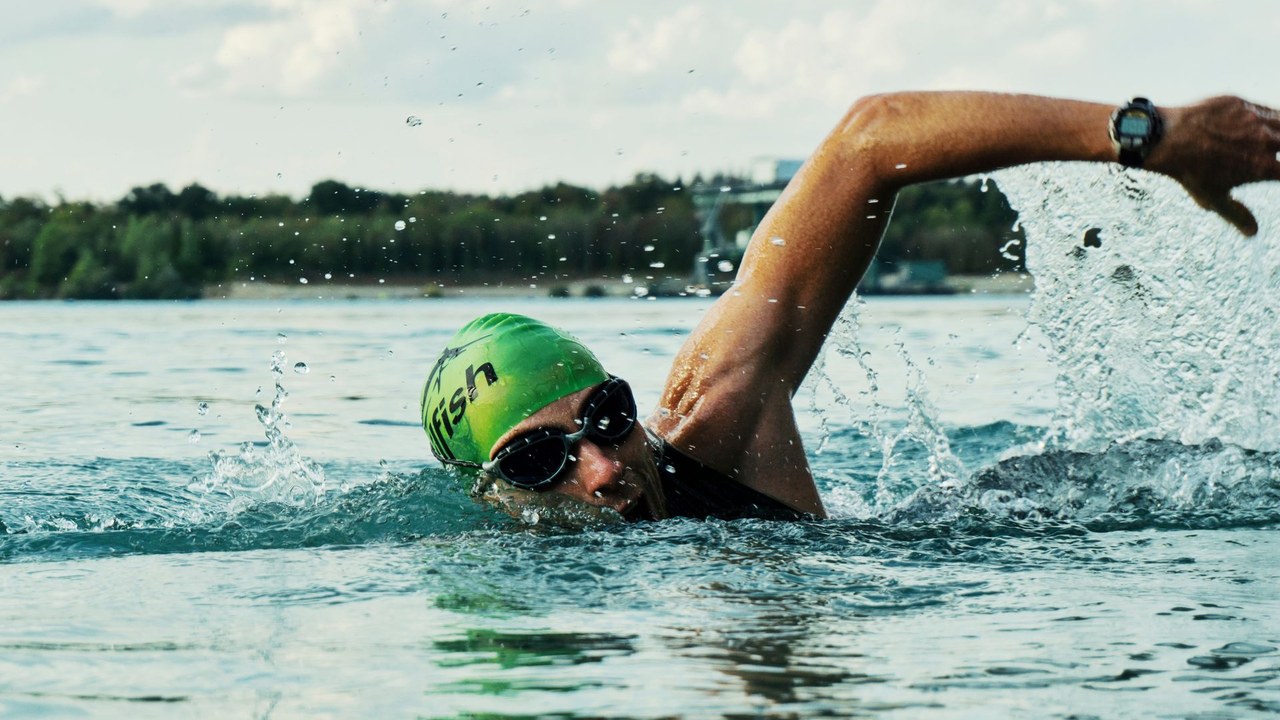
An open-water swimmer mid-freestyle stroke at water level, green cap and goggles.
swimming triathlon

You're Not Bad at Swimming. You're Just New at It.

A runner or cyclist's first month in the pool feels brutal. Here's why fitness doesn't save you in the water — and what actually does.